

We may earn a commission if you click on a product link and make a purchase at no additional cost to you. For more information, please see our disclosure policy.
Last updated: November 28, 2025
Key Takeaways
- Entry roles shifting: AI is automating many routine tasks that once defined entry-level jobs, pushing newcomers toward higher-value work from day one.
- Career paths rewritten: Traditional “ladder rungs” such as junior admin or fundamental
analyst roles are shrinking, while AI-related and hybrid human–AI positions are emerging. - Skills expectations rising: Employers now expect early-career candidates to bring AI literacy, stronger
critical thinking , and better communication than previous cohorts. - Hiring process evolving: AI-driven screening, assessments, and portfolio reviews increasingly shape who even gets seen by human recruiters.
- Proactive workers benefit: Those who learn to use AI as a tool, build proof-of-work projects, and stay adaptable can accelerate their careers rather than stall them.
Artificial intelligence is quietly rewriting how careers begin. Tasks that once defined entry-level work—research, drafting, data entry, simple analysis, basic

THE FUTURE OF WORK: UNDERSTANDING THE IMPACT OF AI ON JOB SECURITY AND UNEMPLOYMENT
This book is an in-depth exploration of the impact of Artificial Intelligence (AI) on job security and unemployment. It covers various aspects of AI, including its history, current state of development, and potential implications for the workforce and society.
We earn a commission if you click this link and make a purchase at no additional cost to you.
01/25/2026 09:00 am GMT

Why Entry-Level Jobs Are Being Impacted First
AI systems excel at tasks that are repetitive, rules-based, and structured, which historically make up a large share of entry-level work. Employers see immediate cost and efficiency benefits from automating activities such as compiling reports, cleaning data, summarizing documents, or handling simple
Because junior employees are often hired to do precisely this kind of work, their roles are naturally the first to be reshaped or reduced. Instead of spending months learning the basics through low-risk tasks, new hires are being dropped into responsibilities that require judgment, creativity, and client-facing communication much faster.
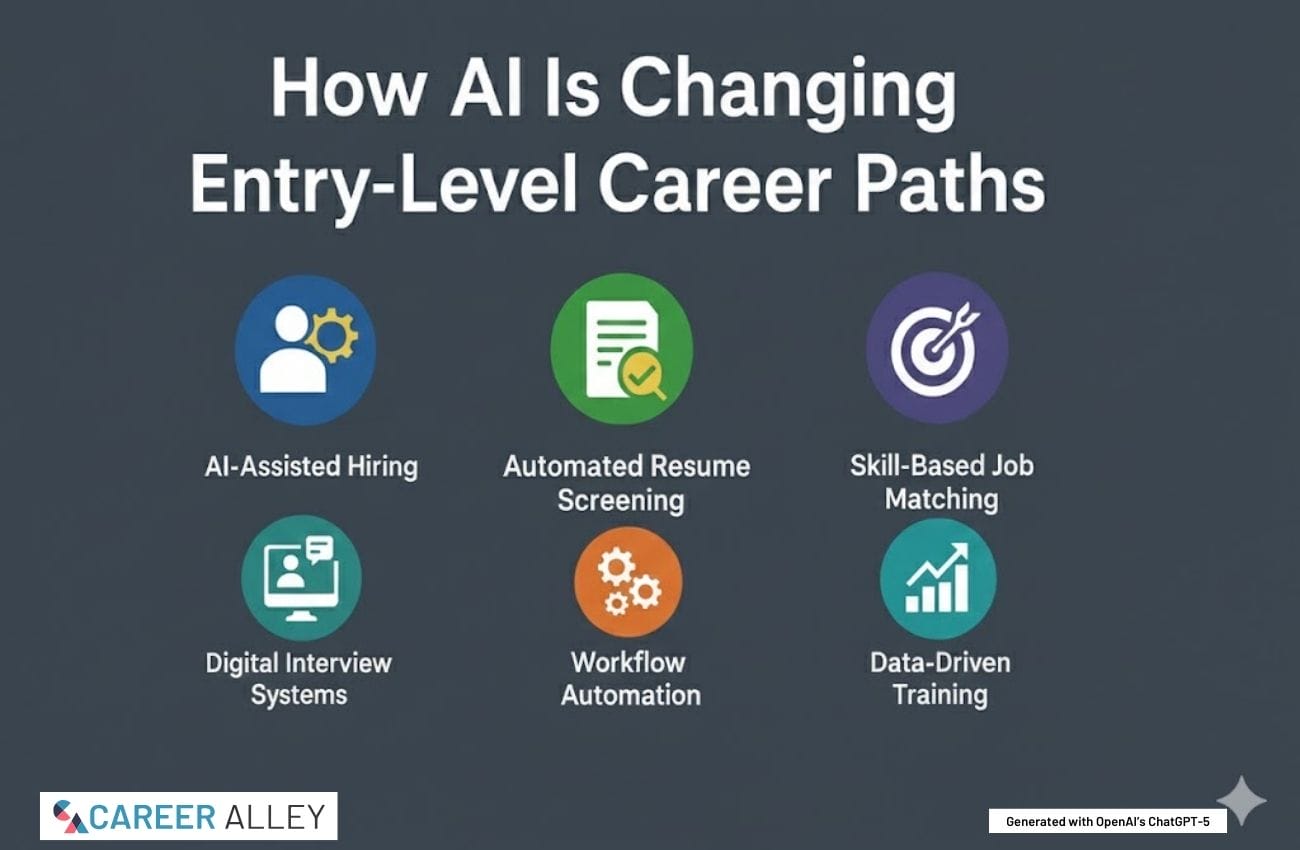
How AI Is Changing Entry-Level Career Paths
The classic early-career journey used to follow a predictable script: start with simple tasks, learn the systems, gradually take on more complex work, and climb from junior to mid-level roles. AI is disrupting that script. In many office, tech, and service environments, the “grunt work” that once served as a
Some traditional junior roles are shrinking or disappearing altogether, including basic data-entry positions, routine

AI Career Pathways: Navigating the Future
This book provides an in-depth look at the various career paths available in the AI industry. It covers everything from the basics of AI to the most advanced technologies, giving readers the tools they need to make informed decisions about their future.
We earn a commission if you click this link and make a purchase at no additional cost to you.
01/25/2026 06:03 pm GMT
How AI Is Changing the Entry-Level Hiring Process
AI is not only transforming the work itself; it is also changing who gets hired in the first place. Many employers now use AI-powered tools to scan résumés, parse keywords, and sort candidates before a human ever looks at an application. Automated assessments can test writing, logic, or technical
Early-career candidates who rely solely on generic résumés and vague job descriptions risk being filtered out by these systems.
The Skills Early-Career Workers Need Now
Because AI can handle so many routine tasks, the
Communication

Job Search Reinvented – TopResume
We’re with you until you land your next job — placement support guaranteed. Four expert services. One simple fee. This personal, done-for-you, job placement support service has everything you need to find your next role.
We earn a commission if you click this link and make a purchase at no additional cost to you.
How AI Is Changing On-the-Job Learning
In the past, much of the learning at the start of a career happened through repetitive, lower-risk tasks that gave newcomers time to understand the business and refine their
To keep growing, new hires must proactively seek feedback, ask for context around decisions, and intentionally practice the skills that AI cannot replicate, such as relationship-building, nuanced judgment, and ethical consideration.
Industry-Specific Impacts on Entry-Level Paths
AI’s impact on entry-level careers varies by industry, but the pattern is similar: repetitive tasks shrink while higher-value responsibilities expand. In technology and data roles, simple coding, testing, and documentation work are increasingly automated, while junior professionals are expected to understand system behavior, troubleshoot complex issues, and design better workflows. In marketing and communications, AI can quickly draft copy or analyze campaign data, so early-career employees are asked to focus more on strategy, storytelling, and brand consistency.
In finance and business operations, spreadsheet-heavy tasks and basic reporting are increasingly automated, while junior staff are pulled into forecasting, scenario planning, and client discussions sooner than before.

Chegg – Real World Skills to Launch Your Dream Career
Build the real-world skills you need to stand out to employers hiring for entry-level roles with Chegg Skills. Select a career path below to access exclusive internships and gain real-world skills. Students who add top skills to their resume are 3x more likely to hear back from potential employers
We earn a commission if you click this link and make a purchase at no additional cost to you.
Action Plan for Job Seekers Entering the AI Era
For students, recent graduates, and career changers, the goal is not to compete with AI but to show you can work effectively with it. Start by building familiarity with widely used AI tools in your field and creating small projects that demonstrate how you use them to produce better results, not just faster ones. Document these examples in a portfolio, Git repository, or online showcase that employers can review.
Focus your learning on
- Job Trends: Review the Future of Jobs Report to understand which roles and
skills global employers expect to grow or shrink. - AI Literacy: Explore introductory AI courses and resources on Coursera to build foundational knowledge and hands-on practice.
- Career Mapping: Try LinkedIn’s Career Explorer to see how your current
skills connect to new roles and emerging AI-impacted opportunities. - Job Search Strategy: Use the Indeed Career Guide for up-to-date advice on résumés, interviews, and job
search tactics in an AI-drivenhiring landscape.
- Skill Building: Browse free AI and digital
skills trainings from Grow with Google to strengthen your employability in entry-level roles.

JobCopilot | Automate Job Applications
Get 10X more Job Interviews with JobCopilot. Automatically apply to jobs from 50,000+ companies worldwide
We earn a commission if you click this link and make a purchase at no additional cost to you.
Next Steps
- Audit your current
skills , highlight where AI already supports or could support your work, and note the gaps you want to close. - Create a small project that uses AI to solve a real problem, and document your process, decisions, and results for your portfolio.
- Update your résumé and online profiles to emphasize impact, problem-solving, and concrete examples of using digital or AI tools.
- Talk with professionals in roles you want and ask how AI has changed their entry-level work, responsibilities, and advancement paths.
- Set up a simple routine to explore new AI tools regularly so you stay comfortable adapting to changes in your target industry.
Final Words
AI is not removing the need for early-career professionals; it is reshaping what those early roles look like and how quickly responsibility arrives. Workers who learn to collaborate with AI, focus on high-value human

It’s Not You, It’s Your Job Search
10 Ways Your Job Search Is Messing With Your Mind (Plus 43 Super-Practical Tips to Undo the Voodoo)
We earn a commission if you click this link and make a purchase at no additional cost to you.
01/25/2026 10:01 pm GMT

Mark Fiebert is a former finance executive who hired and managed dozens of professionals during his 30-plus-year career. He now shares expert job search, resume, and career advice on CareerAlley.com.